
Barcelona Open House 2026: No Gaudí buildings will be open, and Sant Pau will open six of its entrances
We reviewed the official program for October 24th and 25th, and there isn't a single work by Gaudí listed. What is being offered for free, however, is the surrounding modernist architecture, including six entrances at Sant Pau, the two Jujol buildings in Sant Joan Despí, and four officially listed sites that don't quite match up.
The 48h Open House Barcelona 2026 will be held on Saturday, October 24th, and Sunday, October 25th. It's two days of open doors, with no ticket required and no reservation needed for almost all locations, allowing you to enter buildings that are normally offices, schools, consulates, water treatment plants, or someone's home.
And the first thing is what almost no one writes: there isn't a single work by Gaudí in the program. Not the Sagrada Família, not Park Güell, not Casa Batlló, not La Pedrera, not Casa Vicens, not Palau Güell, not Torre Bellesguard. The official program for this edition is published in PDF, and we read it completely, item by item, on October 14, 2026. None of them are his.
That doesn't make the weekend bad news for those who come to see Modernism. It makes it something else, and much better: it's an opportunity to visit the buildings where people who worked alongside Gaudí, and those who competed with him, once worked – buildings that you can't visit on any other day of the year.
The dates are the 24th and 25th, and the official website still mentions 2025
The homepage of 48hopenhousebarcelona.org states it clearly: "Open doors on October 24th and 25th," and below that, "The 2026 Festival will be held on October 24th and 25th." The Catalan News agency published it on October 6th with the same dates and one more detail: it's the 17th edition. This is important because there's a common misunderstanding, and that is that the 16th edition was in 2025, on October 25th and 26th.
So far, everything is clear. The problem arises when you open the "how it works" page of the festival itself, which is where you go to find out how to get in. Its header mentions the weekend of October 24th and 25th, and its "Dates to remember" section lists three dates from the 2026 calendar. But further down, in the "Geographic scope" section, there is this:
BARCELONA: 25 and 26 October 2025. BADALONA: 25 and 26 October 2025. SANTA COLOMA DE GRAMENET: 25 and 26 October 2025…
Here are the dates from last year, with the seven municipalities from last year. Two paragraphs later, the same page continues to say that "the 2025 edition of the 48h Open House BCN architecture festival will be in person," and at the end, it suggests the hashtags #ohb25. This is the 2025 section that no one removed.
The practical consequence is small but real: in the 2026 program, there are six cities participating, not seven. Badalona, Barcelona, L'Hospitalet de Llobregat, Sant Joan Despí, Sitges, and Vilassar de Dalt. Santa Coloma de Gramenet is not on the schedule for this edition, and anyone who relies on that information will go to a city where nothing is open. We had a similar experience with another city event: the website for La Mercè displayed three different sets of dates on the same page.
Four official figures for the same program, and none of them match
Since we're talking about numbers, someone will have to count them, because no one has done so yet. The festival itself publishes four different figures regarding its attendance:
- The cover says "over 220 spaces."
- The footer of every page on the website states "over 250 buildings."
- The operational page states, "207 activities (buildings and routes) are offered."
- The press release, as reported by Catalan News, states that there are 217 buildings, 63 of which are new, and seven itineraries.
And then there's the schedule, which is the document that people actually use. It's the PDF file PROGRAMACIO_OHB26_web_1.pdf, seven pages long, with columns for zone, name, time, address, and a column indicating whether registration is required. Counting them individually, there are 222 entries. The numbering goes up to 225, but numbers 35, 64, and 156 are missing, and all three omissions fall exactly at a page break; they were lost during the layout process.
Of those 222 activities, 10 are itineraries (not seven), and two are guided tours in Vilassar de Dalt. And 22 require prior registration. That is to say, 200 activities can be visited by simply showing up at the door, and that is the figure used for planning.

The modernist complex of Sant Pau opens six entrances

The largest group, and the most affordable to see that Saturday
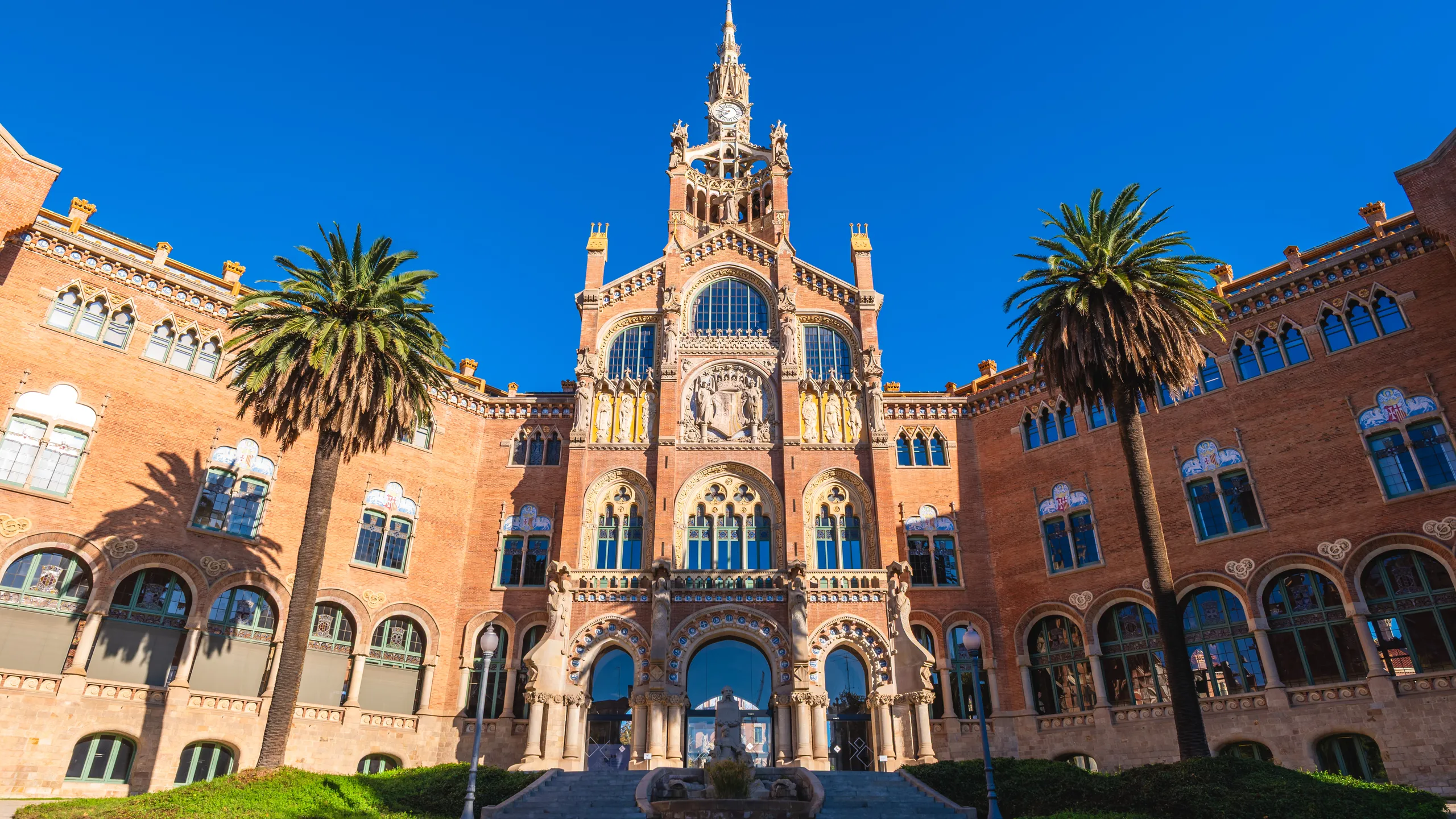
If one were to choose a single stop for the weekend based on modernist criteria, it would be this one. The Santa Creu i Sant Pau complex, the largest modernist ensemble in the world and the masterpiece of Lluís Domènech i Montaner, appears six times in the itinerary, and each entry highlights a different part.
Four areas are freely accessible: the School of Nursing, the Faculty of Medicine at the UAB, the Kālida Foundation, and the Research Institute. The other two areas, which lead to the historic hospital and the tour of the modernist complex, require registration.
All events are scheduled for Saturday, the 24th. The venue is not specified for Sunday.
| Profile | Schedule | Enrollment |
|---|---|---|
| University School of Nursing | 10:00 AM to 7:00 PM | No |
| Faculty of Medicine, UAB | 10:00 AM to 7:00 PM | No |
| Kālida Foundation | 10:00 AM to 7:00 PM | No |
| Sant Pau Research Institute | 10:00 AM to 2:00 PM | No |
| Hospital de la Santa Creu i Sant Pau | Visits are available at 11:00 AM, 12:00 PM, and 1:00 PM | Yes |
| Itinerary: Modernist Complex of Sant Pau | 6:30 PM to 9:00 PM | Yes |
The last row deserves a minute. From 6:30 PM to 9:00 PM is not just any hour: the Sant Pau site closes its paid visits at 6:30 PM from April to October, according to its own website. The Open House itinerary literally begins when the time slot that can be purchased ends. That time slot does not exist at the ticket office, no matter the price.
And the reference price, which was checked again on October 14, 2026, on santpaubarcelona.org, is as follows: the general admission costs 18 € until 2:00 PM and 17 € from 2:00 PM onwards. It is the only price that decreases in the afternoon that we have found throughout the entire modernist circuit of the city.
Jujol, Gaudí's collaborator, has an entire town featured in the program
This is the part that isn't on any "things to see at the open house" list, and it's the reason the trip is worthwhile for anyone who has come to Barcelona specifically to see Gaudí's work.
Josep Maria Jujol i Gibert (Tarragona, 1879 – Barcelona, 1949) is the man who, with his own hands, created a significant portion of what is photographed as Gaudí's work. The Gran Enciclopèdia Catalana summarizes it succinctly: from the time he finished his studies in 1906, he worked with Gaudí and collaborated on La Pedrera, Park Güell, and the renovation of the cathedral of Mallorca, and he was "the most qualified artist in the circle of collaborators that Gaudí formed in his workshop-school at the Sagrada Família." The mosaic work on the undulating benches of Park Güell came from there.
Jujol was also the municipal architect of Sant Joan Despí, in the Baix Llobregat region, just outside Barcelona and with its own train station. The Department of Culture of the Generalitat describes what he did there with a phrase that is not found in brochures: he transformed the town into his "laboratory of architectural experiments." And Sant Joan Despí contributes to this edition with fifteen entries, including its two largest buildings, free of charge and without registration.
| Building | Address | Schedule |
|---|---|---|
| Can Negre (Jujol Center) | Catalunya Square, no number | Saturday: 4:00 PM - 8:00 PM; Sunday: 10:00 AM - 2:00 PM and 4:00 PM - 8:00 PM |
| Torre de la Creu, also known as the "Tower of Eggs." | Canalies Avenue, 14 | Saturday and Sunday: 10:00 AM - 2:00 PM and 4:00 PM - 8:00 PM |
| Church of Saint John the Baptist | 1 Plaça l'Església | Saturday 4:00 PM - 7:00 PM; Sunday 4:00 PM - 8:00 PM |
| Camprubí House | September 11th Avenue | Saturday, 4:00 PM - 8:00 PM |
| Cal Sandiumenge | Main Street, 31 | Saturday, 4:00 PM - 7:00 PM |
The Torre de la Creu, built in 1913, is known as Torre dels Ous because of the shape of its domes; it was Jujol's first commission in the town. Can Negre is a 17th-century farmhouse that he renovated, and it is the building with which Sant Joan Despí identifies: the facade's gallery is shaped like a carriage. Both are visited on both days, without asking anything from anyone.
Just a small detail for those who want to plan carefully: both places are open in the morning and afternoon on Sundays, but only in the afternoon on Saturdays. Saturday morning is reserved for the Sant Pau event. They fit together perfectly.
Free modernist buildings in Barcelona: a curated list
Within Barcelona, the 2026 program has less Art Nouveau than its reputation suggests, and it is spread out. These are the stops with genuine Art Nouveau or Gaudí-related interest, along with the area where the festival groups them. None require registration. The actual distances between one stop and the next, for the days of the year when they need to be paid, are in our walking routes through the Eixample.
| Building | Area | Schedule | Address |
|---|---|---|---|
| Macaya Palace | Eixample Right | Saturday, 9:00 AM - 6:00 PM | Passeig de Sant Joan, number 108 |
| Vestibules of the Sayrach House and the Montserrat House | Diagonal | Sunday, 10:00 AM - 7:00 PM | Diagonal Avenue, 423-425 |
| Old Pérez Samanillo House (Equestrian Club) | Diagonal | Sunday, 10:00 AM - 2:30 PM | Balmes Street, number 169 bis |
| Antics Tallers Manyach (Josep Maria Jujol School) | Gràcia | Sunday: 10:00 AM - 2:00 PM and 4:00 PM - 6:00 PM | 41-45 Riera de Sant Miquel |
| Arús Library | Eixample Right | Saturday, 11:00 AM - 2:00 PM | Passeig de Sant Joan, number 26 |
| Liceu Circle | Center | Sunday, 10:00 AM - 1:00 PM | 65 La Rambla |
| Former Palau Savassona (Barcelona Athenaeum) | Center | Sunday, 10:00 AM - 7:00 PM | 6 Carrer de la Canuda Street |
| Casa Frederic Vallet Xiró II | Eixample Right | Sunday, 10:00 AM - 7:00 PM | Mallorca Street, 207 |
Here are two clarifications about that table, because these are the kinds of details that guides often get wrong.
The Palau Macaya is not by Gaudí. It was designed by Josep Puig i Cadafalch for the industrialist Roman Macaya Gibert, and the stone sculptures are by Eusebi Arnau and Alfons Juyol. The family lived there until 1914; "La Caixa" bought it in 1947, and today it is their social center, which is the reason why it is open to the public. The City Council has designated it as a cultural asset of national interest since 1973. It is, without a doubt, the most striking building on the list, and it is open for nine consecutive hours on Saturdays.
The Casa Sayrach is indeed in the Gaudinian style, and its authorship has a footnote. The Modernism Route attributes it to Manuel Sayrach i Carreras, who was a declared admirer of Gaudí and his idea of taking nature as a model, but it was not named until 1917: the building's plans, from 1915-1918, were signed by the architect Gabriel Borrell. During the Open House, only the lobbies are visited, not the floors.
The information about Gràcia mentions a detail: the festival calls it "Antics Tallers Manyach (Escola Josep Maria Jujol)," and the school is named after Jujol. What the Encyclopedia documents about the Mañac family is the renovation of their shop on Ferran Street in 1911, which is a different building. If you're looking for a work signed by Jujol, you're sure to find one in Sant Joan Despí.
What usually costs money, but not that weekend
The value of the Open House event isn't just about visiting buildings. There are several sites that can be visited any day of the year for a fee, and those two days are included in the program. The prices listed in this table were verified on the official websites on October 14, 2026, as that's the only way to ensure that a price is accurate.
| Space | Official standard rate | During the open house |
|---|---|---|
| Sant Pau Modernist Site | 18€ until 2 PM, 17€ after that | Four spots are available without registration, and two require registration, on Saturday |
| National Museum of Art of Catalonia (MNAC) | €12 for the standard option, €2 for the basic option | Sunday, from 10:00 AM to 3:00 PM |
| Spanish Village | Annual fee; €20 when purchased together with the MNAC (National Art Museum of Catalonia) ticket | Sunday, from 10:00 AM to 7:00 PM |
| Mies van der Rohe Pavilion | Year-round payment option | Sunday, from 10:00 AM to 7:00 PM |
| Joan Miró Foundation | Year-round payment option | Sundays, from 4:00 PM to 7:00 PM |
| Royal Monastery of Santa Maria de Pedralbes | Year-round payment option | Sunday, from 10:00 AM to 5:00 PM |
The MNAC has a detail that changes the calculation, and that almost no one notices. Its website explains that admission is free every Saturday starting at 3:00 PM and on the first Sunday of each month. October 25, 2026, is not the first Sunday, and the Open House ticket is for Sunday morning: in that case, the free admission is genuine, and it saves you the €12. On Saturday the 24th, however, it would have been free starting at 3:00 PM anyway.
The last two rows of the table intentionally say "paid entry, all year" instead of a specific number. The prices were not reviewed on the day this was published, and we preferred to leave the space blank rather than copy a number from two months ago.
Here are three ways to plan your weekend
These are created using the actual event schedule, not just good intentions. The festival organizes the activities into zones that are easily accessible on foot, and this is the most sensible way to use it.
Serious Modernism, Saturday
Tomorrow, at the Sant Pau site, the modernist route is scheduled for 6:30 PM. In between, there's the Palau Macaya, which is open from 9:00 AM to 6:00 PM and is just two metro stops away. Two buildings, each designed by a different architect, and the best part is, it's free.
Jujol Market, Sundays
In the morning, take the train to Sant Joan Despí to visit Can Negre and Torre de la Creu, which are open from 10:00 AM to 2:00 PM. Then, return to Barcelona to visit the Escola Josep Maria Jujol in Gràcia, which is open from 4:00 PM to 6:00 PM.
Diagonal Avenue and Rambla, Sunday
Casa Sayrach and Casa Pérez Samanillo are both located on the same stretch of Diagonal Avenue, and both are open on Sunday mornings. Further down the street, Cercle del Liceu closes at 1:00 PM, while Ateneu remains open until 7:00 PM.
Registration opens on October 19th, and some options cost only 3 euros
Here's the only small print for the weekend, and it's now published. The 22 slots that require registration – the guided tours and infrastructure buildings, which the organization reserves for security reasons – will open for reservations on Monday, October 19, 2026. Before that day, there's nothing to reserve; after that, the guided tours are the ones that sell out the fastest.
And a phrase from the official website contradicts the idea of a "free weekend": when registration is managed by Eventbrite, each person can reserve up to two tickets, and each one costs €3 to cover administrative fees. Children need their own ticket. It's not the price of the building itself, but it comes from the same pocket, and for a family visit of four, it's €12.
The rest of the program, the 200 tickets without a specific time slot, operates on a first-come, first-served basis. The organizers publish a map that shows, in real-time, where there are more and fewer people, and they announce updates on their social media channels. They also mark the buildings with high demand with a red circle on the schedule. Checking the map before crossing the city can save you a lot of waiting time.
What to see in Barcelona in October if the Open House event doesn't quite satisfy you

Two of the most sought-after modernist buildings will be unavailable during the weekend, and it's best to know this before making plans. The Palau de la Música Catalana, the other major work by Domènech i Montaner, does not have availability in the 2026 program. The Casa Amatller, by Puig i Cadafalch, is also unavailable. And, as mentioned before, fewer of Gaudí's four major works are available.
There is also a street name coincidence that can be confusing. The Universitat CEU Abat Oliba is open on Saturdays and Sundays from 10:00 AM to 2:00 PM, and it is located at carrer de Bellesguard, 30: the same short street where Gaudí built the Torre Bellesguard. The university is free to visit that weekend; the tower is not. They are two distinct visits on the same street, and they should not be confused when you arrive.
If what you're looking for is modernism that isn't by Gaudí, our page about Gaudí and Catalan Modernism explains who did what and why they are so often confused. And if what you're looking for is Gaudí without paying, the Open House weekend doesn't offer anything that isn't already in the Hidden Gaudí: the pavilions of the Güell Estate from the gate, the lampposts in Plaça Reial, the facade of Casa Vicens from the street.
A final suggestion, in case the festival sparks a desire to explore further. The modernist route of Baix Llobregat, published by the Generalitat, begins at the crypt of the Colònia Güell, continues to Sant Joan Despí by Jujol, and ends at La Rajoleta in Esplugues, the kilns of the former Pujol i Bausis factory, where the ceramics were fired that Gaudí, Puig i Cadafalch, and Domènech i Montaner commissioned. The three buildings featured in Open House and the three architects mentioned in this note all came from the same kiln.
Frequently Asked Questions about the 48h Open House Barcelona 2026
When is the 48-Hour Open House Barcelona event in 2026?
The event will take place on Saturday, October 24th, and Sunday, October 25th, 2026. This is the 17th edition. The usual confusion arises because the 16th edition was held on October 25th and 26th, 2025, and the operational section of the official website still contains a section with the dates and municipalities of that previous edition.
Do I need to make a reservation or pay anything?
The festival is free and does not sell tickets. Out of the 222 entries in the official program, 200 can be attended simply by showing up at the door, while 22 require advance registration, which opens on Monday, October 19, 2026. When registration is handled through Eventbrite, each ticket costs €3 for processing fees, with a maximum of two per person, and children also need their own tickets.
Is it possible to enter the Sagrada Familia or Park Güell for free that weekend?
No. None of Gaudí's works are included in the 2026 program: not the Sagrada Familia, not Park Güell, not Casa Batlló, not La Pedrera, not Casa Vicens, not Palau Güell, and not Torre Bellesguard. We checked this ourselves, item by item, in the official program PDF on October 14, 2026.
Which modernist buildings offer free admission?
In Barcelona, some notable examples include the Palau Macaya by Puig i Cadafalch, the entrance halls of the Casa Sayrach, the former Casa Pérez Samanillo, the Arús Library, the Cercle del Liceu, and the Ateneu Barcelonès, among others. Outside the city, two of Josep Maria Jujol's most significant buildings are located in Sant Joan Despí: Can Negre and the Torre de la Creu. And, the Sant Pau complex, designed by Domènech i Montaner, is also worth visiting, especially on Saturdays.
How many buildings are opening in total?
It depends on which official figure you look at, and they don't all match. The festival's cover states "more than 220 venues," the footer says "more than 250 buildings," the "how it works" page lists "207 activities," and the press release mentions 217 buildings plus seven itineraries. Counting each entry individually in the PDF program, there are 222 entries, of which 10 are itineraries.
Which cities are participating in the 2026 [event/competition/games]?
Six cities are included: Badalona, Barcelona, L'Hospitalet de Llobregat, Sant Joan Despí, Sitges, and Vilassar de Dalt. Santa Coloma de Gramenet appears in an outdated section of the official website, but it does not have a listing in the program for this edition.
Is it worth visiting Sant Joan Despí?
If you're interested in Gaudí's world, then yes. Jujol worked with him from 1906 on projects like La Pedrera, Park Güell, and the cathedral in Mallorca, and he also served as the municipal architect of Sant Joan Despí. Can Negre and Torre de la Creu are both open for both days, and no registration is required. The town also has a train station.
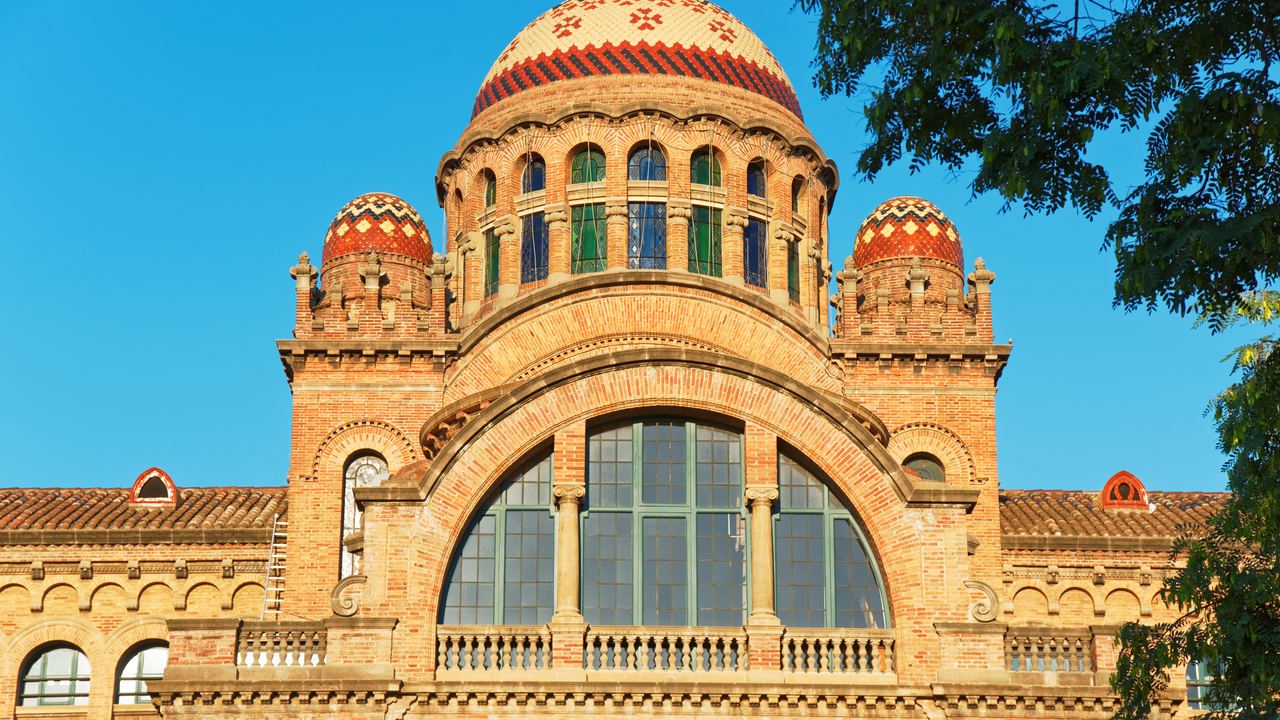
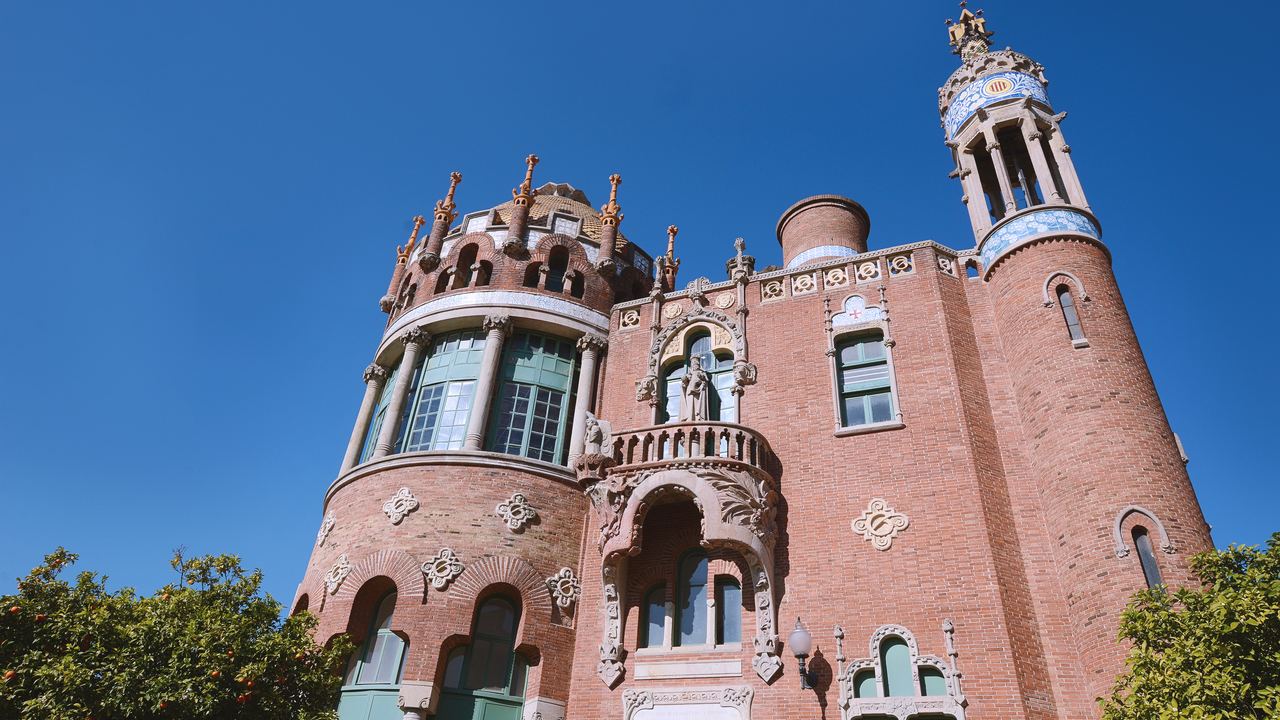
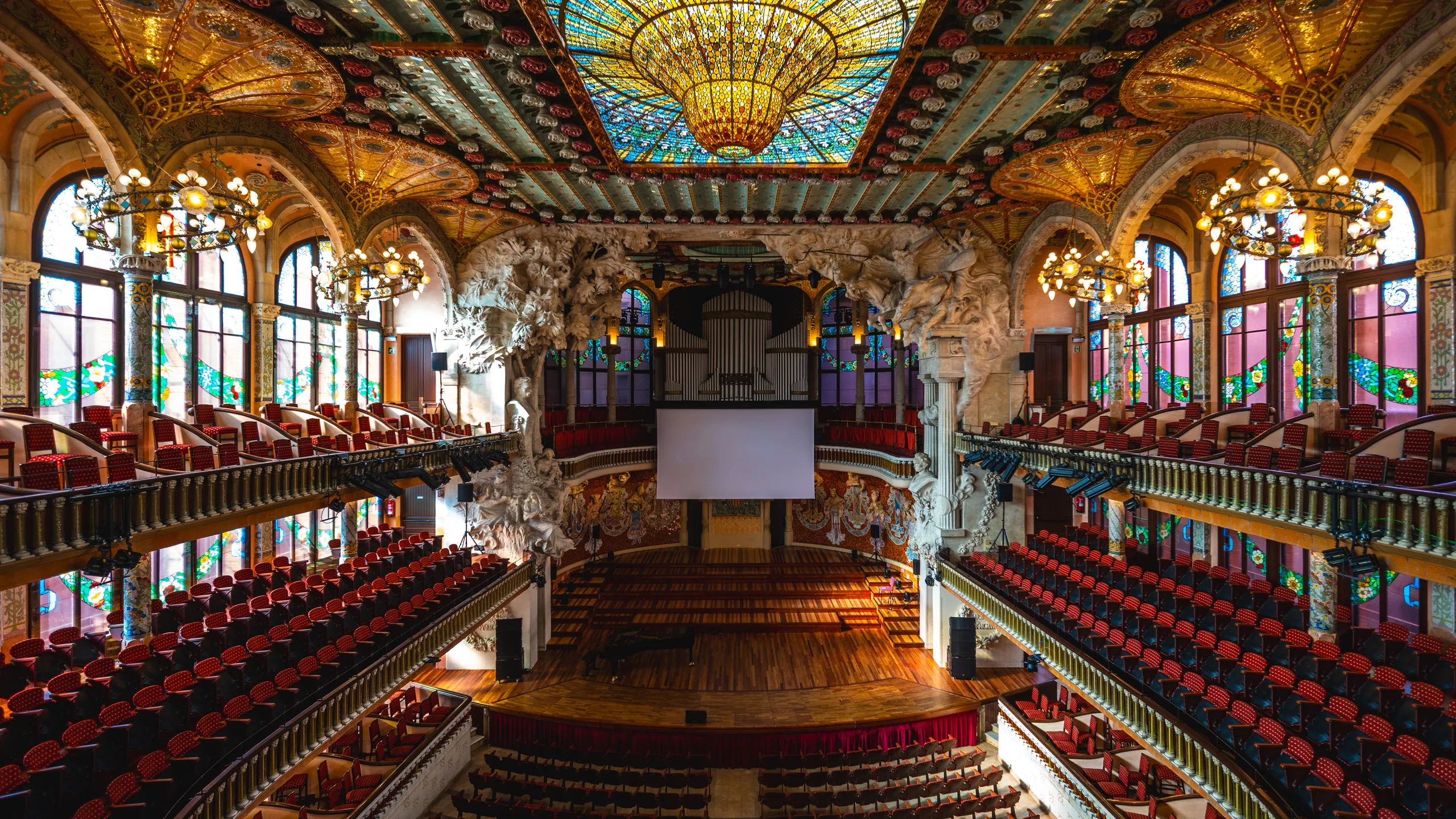
Joining the modernist movement, even if it means doing so during the week instead of on the weekend
The Open House event opens four sections of the Sant Pau complex to the public once a year, on a Saturday. On all other days, admission must be purchased, and the following are the ticket options available, with the official price of €18 as a reference. The last two options include the Palau de la Música and La Pedrera, which are not included in the 2026 program.

Sant Pau Modernist Site: Free admission for visitors
Free guided tour of the Domènech i Montaner complex, with wheelchair access and an open-access ticket valid for the duration of opening hours.

Entrance to Sant Pau: pavilions, galleries, and gardens
The Hypostyle Hall, featuring Saint Raphael with his surgical instruments, the Administrative Pavilion, along with the underground galleries and gardens.

La Pedrera and Sant Pau: Gaudí and Domènech i Montaner
Casa Milà with an audio guide and the Hospital de Sant Pau without queues: experience the modernist architecture of Gaudí and Domènech i Montaner in a single day.

Palau de la Música and Hospital de Sant Pau: The Domènech i Montaner Entrance
Two of Domènech i Montaner's most significant buildings, presented in a single entry: a concert hall and a hospital, both designed by the same architect.
Ratings collected by Viator, Tripadvisor, Civitatis and Tiqets
Data verified on. Dates, details, schedules, and registration information were available on October 14, 2026, on the website 48hopenhousebarcelona.org and in the PDF schedule; pricing information can be found on the websites of Sant Pau and the MNAC. Sobre este sitio


