

The Catalan Modernism that Gaudí didn't sign
Three buildings, two architects, and 8,316 reviews, most of which incorrectly attribute the designs.
This page exists because the same thing always happens on travel forums. Someone starts a thread titled "Gaudí's houses," lists five buildings, and a resident of Barcelona has to chime in to explain that two of them are not his. The Palau de la Música Catalana and the Modernista Site of Sant Pau are by Lluís Domènech i Montaner. The Casa Amatller is by Josep Puig i Cadafalch. Here are the three, with 19 entries spread among them, starting at €12, plus a table showing who created what and in what year. The rest of the site goes building by building with Gaudí's work; this section discusses the other two architects, who worked at the same time as him, with the same sculptors, sometimes in the same block, and whom almost no guide bothers to mention.
Before we proceed, it's important to say that the fact that these places aren't designed by Gaudí isn't a drawback. In fact, it's the reason why many people who have already seen the Sagrada Família and Casa Batlló recommend these three places instead. There are shorter lines, the entrance fee is significantly lower, and at Sant Pau, you can spend two hours without anyone pushing you from behind. What you won't find here is the facade of Casa Milà (La Pedrera) or the bench at Park Güell. What you will find is a complex spanning nine blocks that housed patients until 2009, and a concert hall that is illuminated by sunlight.
Choose a destination in Catalan Modernism, beyond Gaudí
-

Palau de la Música Catalana
Tickets, guided tours, and concerts at the Palau de la Música Catalana, the hall designed by Domènech i Montaner that doesn't require artificial lighting…
10 experiences -

Sant Pau Modernist Site
The largest collection of modernist architecture in the world: twenty-seven pavilions designed by Domènech i Montaner, which served as a hospital until June…
7 experiences -

Casa Amatller
The Puig i Cadafalch house, located on Passeig de Gràcia and adjacent to Casa Batlló, offers two types of tickets: one for €21 and another for €23.
2 experiences


Gaudí Museum Experiences in Catalan Modernism, beyond Gaudí

Barcelona Guitar Trio & Dance: Paco de Lucía at the Palau
A tribute to Paco de Lucía, featuring three guitarists, two dancers, and Paco de Lucía's own sound engineer, will be held at the Domènech i Montaner auditorium.

Guitar trio and flamenco performance at the Palau de la Música
A program that blends the styles of Falla, Lorca, Chick Corea, and Paco de Lucía, featuring three guitars and a flamenco dancer performing under the glass facade of the Palau de la Música.

Lluís Domènech i Montaner: Sant Pau Hospital, Palau de la Música Catalana, and Casa Fuster
A single ticket provides access to Sant Pau, the Palau de la Música, and Casa Fuster, the least visited of the three. These are all major examples of Catalan Modernism.

Palau de la Música and Hospital de Sant Pau: The Domènech i Montaner Entrance
Two of Domènech i Montaner's most significant buildings, presented in a single entry: a concert hall and a hospital, both designed by the same architect.
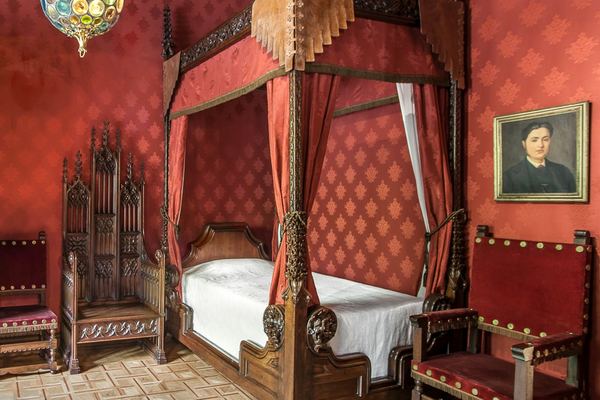
Casa Amatller: Enjoy the chocolate house without the queues
The house that Puig i Cadafalch designed for the chocolatier Antoni Amatller, featuring dragons and knights on its facade, is located next to Casa Batlló.

Casa Amatller with a guided tour and a box of chocolate leaves
The tour is narrated by the owner himself, who shares stories about his travels and his chocolate business, and concludes with a box of Amatller chocolates.

La Pedrera and Sant Pau: Gaudí and Domènech i Montaner
Casa Milà with an audio guide and the Hospital de Sant Pau without queues: experience the modernist architecture of Gaudí and Domènech i Montaner in a single day.

Palau de la Música Catalana with a guided tour and skip-the-line entry
Enjoy skip-the-line entry, a 15-minute audiovisual presentation, and a tour of the glass balustrade staircase, the Lluís Millet Hall, and the auditorium.

Palau de la Música with a guide: four crafts in one hall
The guide explains how the sculpture, mosaic, stained glass, and wrought iron work together to create the most elaborately decorated concert hall in Barcelona.

Sant Pau without queues: the 16 pavilions and their tunnels
The hospital, designed by Domènech i Montaner, was intended to promote healing through its gardens, featuring 16 pavilions and a network of tunnels beneath the complex. It has been a UNESCO World Heritage site since 1997.

Entrance to the Palau de la Música: digital brochure or audio guide
Visit the hall, which opened in 1908, with a digital brochure or audio guide in Spanish. Explore the organ and the glass ceiling.

Palau de la Música, without queues, with the hall in use
Direct access to the central stained-glass hall, where you can learn about the building's history and potentially witness a rehearsal or a concert.

Sant Pau Modernist Site: Free admission for visitors
Free guided tour of the Domènech i Montaner complex, with wheelchair access and an open-access ticket valid for the duration of opening hours.

"Els Llums de Sant Pau": 1,500 meters of Christmas lights
A nighttime tour of 1,500 meters through the pavilions and gardens of the modernist complex, illuminated with millions of lights during the Christmas season.

Palau de la Música tour in Spanish: stage and organ
The tour takes visitors onto the stage where Ella Fitzgerald and Paco de Lucía performed, through the Lluís Millet Hall, and ends in front of the organ.

Palau de la Música with audio guide and access to the stage
The audio guide is downloaded to your mobile device and includes a concert experience in 360 degrees; the tour concludes with a climb onto the stage itself.

Entrance to Sant Pau: pavilions, galleries, and gardens
The Hypostyle Hall, featuring Saint Raphael with his surgical instruments, the Administrative Pavilion, along with the underground galleries and gardens.
Ratings collected by Viator, Tripadvisor, Tiqets and Civitatis
Who built what?
Domènech i Montaner and Puig i Cadafalch are not minor figures. They are the other two key figures of Catalan Modernism, and at one point, they received more public commissions than Gaudí. Domènech directed the School of Architecture in Barcelona for twenty years and served as a member of parliament in Madrid. Puig i Cadafalch, in addition to being an architect, was also an archaeologist and even served as president of the Mancomunitat de Catalunya. What happened afterward was that Gaudí became a brand, while they did not.
The table is organized by what can be purchased, because that's where the surprises lie: two of the most photographed buildings in the Ensanche district don't have any tickets available for sale.
| Building | Architect | Finished | Subway | In this catalog |
|---|---|---|---|---|
| Palau de la Música Catalana (Catalan Music Palace) | Lluís Domènech i Montaner | 1908 | Urquinaona (Lines 1, 4) | 10 products, starting from €20 |
| Sant Pau Modernist Site | Lluís Domènech i Montaner | 1930 | Sant Pau | May 2nd (Line 5) | 7 products, starting from €12 |
| Amatller House | Josep Puig i Cadafalch | 1900 | Passeig de Gràcia (Lines L2, L3, L4) | 2 products, priced at €21 and €23 |
| Fuster House | Lluís Domènech i Montaner | 1911 | Diagonal (Lines 3, 5) | Only within the three-building complex: €45 |
| Casa Lleó Morera | Lluís Domènech i Montaner | 1906 | Passeig de Gràcia (Lines L2, L3, L4) | None: there are no tickets available for sale |
| House of Spikes | Josep Puig i Cadafalch | 1905 | Diagonal (Lines 3, 5) | None: there are no tickets available for sale |
| Batlló House | Antoni Gaudí | 1906 | Passeig de Gràcia (Lines L2, L3, L4) | Yes, and it has its own website: it's a Gaudí creation |

The first of the two
Lluís Domènech i Montaner (1850-1923)
He designed both the Palau de la Música and the Hospital de Sant Pau, which means he created the two buildings that UNESCO jointly inscribed as a World Heritage site in 1997, in a separate listing from Gaudí's. He worked with exposed brick, iron, and ceramics, and with an idea that seems obvious today but wasn't at the time: if the structure is made of iron, the wall no longer needs to support anything and can be completely opened up and filled with glass. The room in the photo is that idea taken to its ultimate conclusion.
He died in 1923, with the Sagrada Família only partially completed. His son, Pere Domènech i Roura, finished the basilica in 1930.

The second
Josep Puig i Cadafalch (1867-1956)
Seventeen years younger than Domènech, and with a style of incorporating historical references that is unlike that of the other two. His signature feature is the stepped design of the building's facade, a borrowing from Northern European Gothic architecture that he implemented on Passeig de Gràcia, right next to Gaudí's marine facade. The two houses were completed six years apart and share a common wall.
He also designed the Casa de les Punxes and the Casaramona factory, which is now the CaixaForum. Later, he left architectural plans behind to pursue politics, and he served as the president of the Mancomunitat de Catalunya (a regional government) between 1917 and 1924. This is why his built works are so limited in number.
Where does the confusion come from?
It's not a matter of ignorance; it's simply how forum threads work. Someone asks about Gaudí's houses, and those who respond recommend the best options available, which aren't always Gaudí's works. Sant Pau and the Palau appear on those lists because they are good recommendations. The person who comes out poorly is the one who doesn't read carefully: they enter looking for an architect and leave with a list of three.
The thread that best illustrates this is from August 23, 2026. A traveler asks for advice on how to get around to see the "Gaudí buildings" and lists the Palau de la Música, Sant Pau, La Pedrera, Casa Milà, and Palau Güell. A local resident responds with a patience that is greatly appreciated.
La Pedrera and Casa Milà are the same building. Of those four, only two were designed by Gaudí: Park Güell and La Pedrera, and only one is a true house, which is La Pedrera.
Forty years during which Barcelona was completely transformed
The Catalan Modernism movement lasted only slightly longer than a generation of architects. The dates below explain why the three buildings on this page were completed around the same time.
The origins
1888
The World Expo
Barcelona demolished the Citadel and hosted the first world exposition in Spain. Domènech designed the café-restaurant in the park, now known as the "Castell dels Tres Dragons": it features exposed brick, exposed ironwork, and no attempt to conceal either material.
The growth
1900-1910
The decade that encompasses almost everything
Over ten years, and all within the same expansion area, the Casa Amatller, Casa Batlló, Casa Lleó Morera, and the Palau de la Música were completed, and construction began on the Hospital de Sant Pau. Three architects working simultaneously, using the same sculptors and the same mosaic workshops.
1923
Domènech i Montaner has died
Sant Pau is left without its architect, with only half of the pavilions still standing. His son completes the project in 1930, using a more restrained style than his father's.
1926
Gaudi dies
A tram hits him on Gran Vía. From that point on, modernism becomes a recent past, which is the worst possible position: for forty years, it is viewed with shame and subjected to criticism.
Today
1997
UNESCO designates Domènech as a World Heritage Site
The Palau de la Música Catalana and the Hospital de Sant Pau are jointly entering the UNESCO World Heritage list, thirteen years after Gaudí's works were added, and under a separate application. Sant Pau achieves this recognition while still operating as a hospital.
2009
Sant Pau stops providing medical care
In June, the services moved to a new hospital located behind the historic site. Only then did the renovations begin, transforming the building into what visitors see today. The renovated building opened in 2014.

What can be bought, and what cannot
Of the seven buildings in the list, three have tickets available for purchase, and four do not. You can only see the exterior of the Casa Lleó Morera and the Casa de les Punxes; there is no ticket available for either of them in any of the three catalogs we use, and stating this is more helpful than leaving the question unanswered. The Casa Fuster is a hotel, and you can only enter with a pass for the three buildings designed by Domènech, which costs 45 €.
If the plan is to see both major attractions and nothing else, the combined ticket for Palau and Sant Pau costs 32 € compared to the 38 € it would cost to purchase them separately. Six euros won't change a trip, but the combined ticket reserves both time slots at once, and the Palau often sells out faster than people expect.
There is no entry that links either Domènech or Puig i Cadafalch with a work by Gaudí. We searched for such connections on August 25, 2026, comparing the three catalogs entry by entry, and found none: Gaudí's works are associated with Gaudí, and Domènech's with Domènech, even though the Amatller and Batlló buildings share a common wall. This is a gap in the product range, not a deliberate decision, and it explains why viewing the entire block necessitates purchasing the buildings separately.
How are they distributed throughout the city?
They are not located near each other, and that affects the planning of the day. The Casa Amatller is part of the route you'll already be taking, right next to the Casa Batlló. The Palau de la Música is in the old town, about a ten-minute walk from Plaça de Catalunya, on a street so narrow that you can't see the entire facade: you have to cross the street and look up, and even then, you'll miss half of it. Sant Pau is located at the very top, at the end of the Gaudí Avenue, and it's both the furthest from the other two and the closest to the Sagrada Família. A day that combines visits to all three works well. But two hours is not enough.
If there's only time for one thing...
Sant Pau. Not because of the architecture, which is more impressive at the Palau, but because of the kind of experience it offers. You can see the Palau in a long hour, following a set route, with the feeling that another group is waiting right behind you. Sant Pau, on the other hand, consists of nine blocks of gardens where you can wander at your own pace, and in August, that's incredibly valuable.
However, if you are traveling as a couple and enjoy music, the experience is quite different. A seat in the Palau concert hall, with the hall full and the music playing, is not like a typical tour, and some people leave saying it was the best part of their trip to Barcelona. It costs €55 and takes place at night, so the stained glass windows are illuminated from within, rather than by the sun: the exact opposite of what you see on the morning tour.
Questions that keep coming up
Is the Palau de la Música Catalana designed by Gaudí?
No. It was designed by Lluís Domènech i Montaner between 1905 and 1908 for the Orfeó Català, and Gaudí had nothing to do with it. If someone told you otherwise, they weren't necessarily being malicious; the Palau is often recommended in the same discussions where people are asking about Gaudí, and it's easy to mistakenly attribute it to him.
And what about the Modernist Site of Sant Pau?
It was also designed by Domènech i Montaner, and it's the largest project of his career. He began work on it in 1902, but he died in 1923 with the project unfinished. His son completed it in 1930. It functioned as a real hospital until June 2009. Its proximity, just nine minutes' walk from the Sagrada Família, contributes to its association with the neighborhood.
So, why do they appear on lists of Gaudí's houses?
Because they are good recommendations, and people recommend good things regardless of who made them. In Barcelona forums, a common response is: if you find Casa Batlló too small and crowded, switch architects and visit Sant Pau instead. The advice is sound. The problem arises when someone copies it into a list titled "Gaudí's houses."
I'm here to see Gaudí. Is it worth making a detour to see him?
It depends on how many days you have. With just two days, it's not feasible: the Sagrada Familia, Park Güell, and one house on Passeig de Gràcia will already fill your schedule, and you're still short on time. With four or five days, yes, you can do it. And the one that offers the best value for its cost is Sant Pau, because it's not just a building, but an entire complex with gardens, and it doesn't have long queues.
Is there a section that combines multiple entries?
Two. The combined ticket for the Palau de la Música and the Hospital de Sant Pau costs €32, which is six euros less than buying the two tickets separately. The Domènech i Montaner pass, priced at €45, includes the Casa Fuster, which is a hotel and cannot be visited any other way. Neither of these options includes the Casa Amatller; that ticket must be purchased separately, and there is no discount for buying it in addition to the other tickets.
Are Modernism and Art Nouveau the same thing?
Yes, the style has different names depending on the country. What was called Art Nouveau in France and Belgium, was known as Jugendstil in Germany, Sezession in Vienna, and Liberty in Italy. In Catalonia, it was called Modernisme. All three providers use both terms to refer to the same buildings, so if you search using one term and get no results, try the other before assuming that it doesn't exist.
The best way to understand the Ensanche is to explore it on foot
The distinctive, eight-sided shapes of Cerdà's city blocks are the reason why buildings can be seen from a distance long before you reach them. Walking routes cover the entire Passeig de Gràcia, both showcasing Gaudí's work and exploring other aspects of the area.
Data verified on. Prices, products, and reviews counted in this catalog on 08/25/2026 on Viator, Tiqets, and Civitatis. Dates and the 1997 inscription come from the UNESCO listing and the buildings' own websites.