
The Gaudí works with no lines
While tickets for the Sagrada Família often sell out days in advance, there are four of Gaudí's other works where tickets are usually available for the same day. These tickets cost between €6 and €24.

The conversation about Gaudí in Barcelona always revolves around two buildings, and both require advance planning. However, there are other works of his—some with the same distinctive style and appeal—that you can visit without having booked tickets weeks in advance. Here's a list, along with the cost of entry and what you can see inside.
Palau Güell: The commission that changed everything
It is located just one hundred meters from Las Ramblas, costs 15 €, and has approximately 2,600 reviews, which is a fraction of the number accumulated by any ticket for the Sagrada Família. It is the palace that Eusebi Güell commissioned from a thirty-four-year-old Gaudí, and it is where almost everything that later became famous first appeared: the parabolic dome with perforations that lets in light as if it were stars, and the mosaic chimneys on the roof, which are a precursor to those of La Pedrera.
Here are two practical tips that are often misunderstood: the bus that stops at the door is the V13, not the 14, and the palace closes for a week in January for maintenance. And an interesting fact: it doesn't publish how many people visit each year.
Bellesguard Tower: the one that's only open in the morning
12 €, one hour of visit, and a schedule that explains why almost no one includes it: from Tuesday to Sunday, from 10:00 AM to 3:00 PM. If you want to see it, it has to be a morning visit. It is located at the foot of Collserola, on the ruins of the castle of the last king of the Crown of Aragon, and that is exactly the theme of the building: Gaudí built a medieval tribute using methods that are not.
Casa Vicens: Where it all began
It's the first house he built, in the Gracia neighborhood, and it opened to the public in 2017: that's why it's still outside the automatic circuit. Tickets cost from €20 and it has around 4,000 reviews. There aren't any curves here yet – there's a grid pattern of green and white tiles, palm tree ironwork, and a facade that looks like it was designed by a different architect. Seeing it after Casa Milà (La Pedrera) helps to put things in perspective: you understand where he was coming from.
A detail worth knowing first: this is the building where the price jumps around the most. The same ticket sells for €20, €21, and €24 depending on who sells it, because the house doesn't publish an official rate.
Artigas Gardens: the work with the fewest visitors
It is located in La Pobla de Lillet, in the Berguedà region, about two hours from Barcelona, and received 44,135 visitors throughout 2024—which is what the Sagrada Família receives in a couple of days. It costs €5.50 when booking and €6 at the ticket office, and it is the only work by Gaudí that is a garden: pergolas, bridges, and caves made of unworked stone, following the course of the Llobregat river when it is still a stream. In some months, you can reach it by the "Tren del Ciment" (Cement Train), which is half the reason for the trip.
How to fit them
The three attractions in Barcelona can easily be visited in a single day, provided that Bellesguard is visited first due to its morning hours. The Artigas Gardens are different; they are more of an excursion, and only make sense if you were already planning to visit the Berguedà region. None of these four attractions require booking weeks in advance, which is precisely what makes them useful when tickets for the Sagrada Família are already sold out for the dates you have in mind.
The works discussed in this article
Casa Vicens, Palau Güell, Torre Bellesguard: these are attractions where tickets are rarely sold out.

Bellesguard Tower, visit independently with an audio guide app
You can explore the area at your own pace using the included audio guide, which covers the site of Martín el Humano's castle and offers stunning views of the entire city of Barcelona.
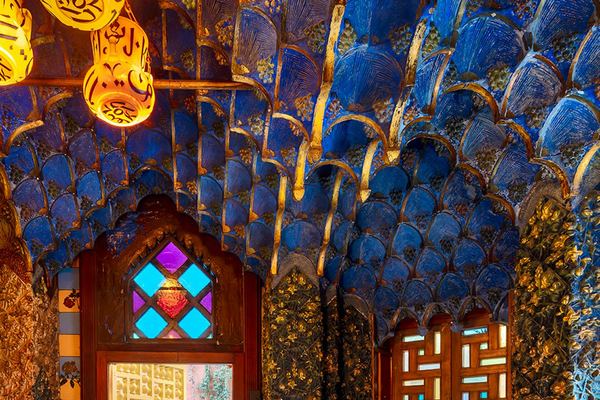
Casa Vicens with a guide: Gaudí before he became Gaudí
A guided tour of the house where Gaudí made his name, a place where he had already experimented with almost everything he would later become famous for.
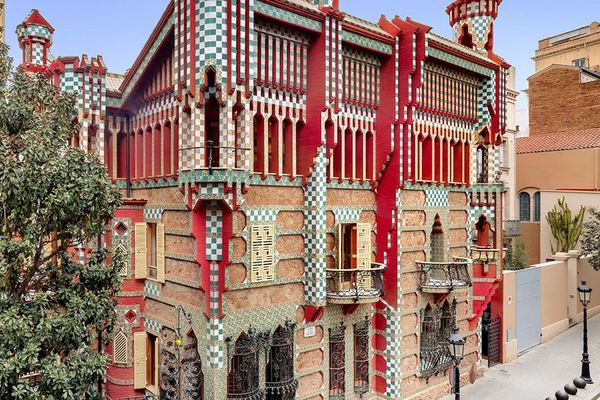
Casa Vicens: Experience Catalan Modernism without the queues
This building represents the architect's first major commission, now a museum, and showcases the ceramics and geometric designs that he would later incorporate into all of his work.
Ratings collected by Tiqets
Data verified on. Opening hours and prices: Official websites of each monument. Visitors to the Artigas Gardens: 2024 visitor statistics. Reviews: Compiled from operator feedback.


